Introduction | Last Chapter | Next Chapter
'Auyuittuq' - The Land that Never Melts
The George River
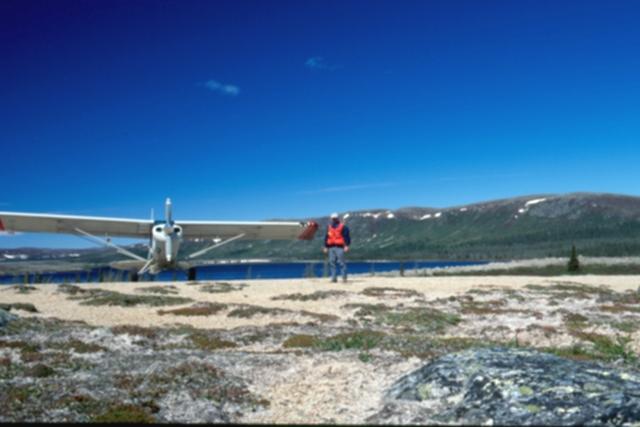
 June 30th, it's 04:00, what is the sun doing up so early? Flight service tells me to expect VFR to the north with cloud cover and chance of showers. I file a flight plan, noting the type of clothing (winter) that I carried and that I do not wish to activate a search until 24 hours after my scheduled arrival at Kujjuaq ("Koo-je-wack"). On most trips I pack enough food and water to last a couple of weeks and always wear a bright orange, multi-pocket survival vest with a quick inflation bladder. My clothing and footwear would keep me warm well below freezing, and for communications there is one radio in the panel, a handheld and a fixed/portable ELT that allows for voice transmission on frequency 121.5. I listen on 126.7 when between airports. Besides sporadic calls when nearing a FSS, you will also hear occasional transatlantic flights giving their remaining fuel and position to Arctic radio. If a sudden problem were to occur, I would activate the ELT remotely, and transmit an appropriate message to anybody that might hear on 126.7. The tone, volume and frequency of that message would of course depend on the seriousness of the problem … enough said.
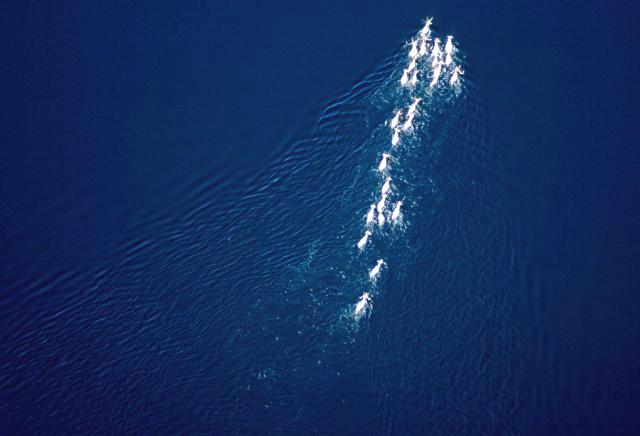
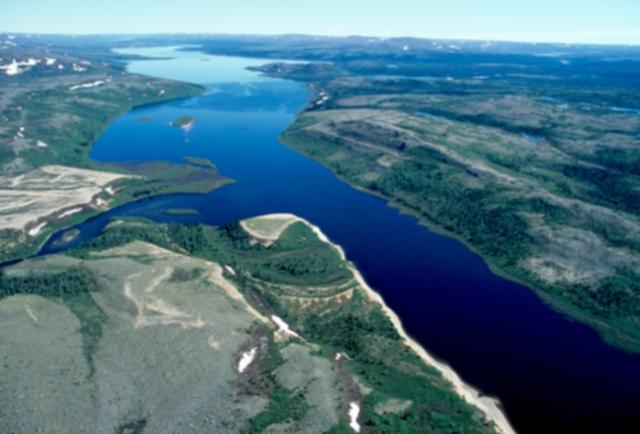
For over 100 miles I followed this awesome wide river as it headed north to Ungava Bay. The clouds were gone, the visibility was forever and the ride was smooth at 1,500 feet; so much for the forecast I had received this morning. Then I saw something in the water, crossing from west to east, trying to get to the other side. Caribou! I was amazed and excited and down lower I went with the video camera ready. The Husky can be flown with the window and door open, by setting the elevator trim so you fly with your feet. 1,975RPM 15-16 inches of manifold pressure and maybe a notch or two of flaps. It requires that you dress warmly and have gloves with open fingertips to help run the cameras. Back and forth I went, from one side of the river to the other, taking pictures and video. I don't remember how many of these small herds I saw, but the experience was memorable. Northern Quebec has one of the world's largest concentrations of caribou, nearly a million animals. Occasionally I would pass an abandoned camp on the riverbank that would be used by native hunters and fishermen.
|